
Herringbone Flat Cap: The UK’s Timeless Style Icon Guide

The Herringbone Flat Cap is more than just headwear; it’s a piece of living history, a symbol of enduring British style, and a testament to classic craftsmanship. From the rolling hills of the countryside to the bustling streets of London, this iconic cap has graced the heads of gentlemen for generations. In this definitive guide, we delve deep into the world of the G&H Wool Herringbone Flat Cap in Brown, exploring its rich heritage, the unique qualities of its fabric, and how you can make this timeless accessory a cornerstone of your personal style here in the United Kingdom.
Table of Contents
- 1. The Enduring Legacy of the Herringbone Flat Cap in the United Kingdom
- 2. What Makes Herringbone Tweed So Special?
- 3. Anatomy of a Classic: Deconstructing the G&H Wool Flat Cap
- 4. How to Style Your Brown Herringbone Flat Cap: A UK Gentleman’s Guide
- 5. Choosing the Perfect Fit: A Herringbone Flat Cap Sizing Guide
- 6. Caring for Your Wool Herringbone Cap: Longevity and Maintenance
- 7. Beyond the Brown: Exploring Other Herringbone Cap Styles
- 8. Frequently Asked Questions
The Enduring Legacy of the Herringbone Flat Cap in the United Kingdom
The story of the flat cap is woven into the very fabric of British history. Its origins can be traced back to 14th-century Northern England, where it was known as a “bonnet.” However, its widespread popularity was cemented by a peculiar Act of Parliament in 1571. In an effort to stimulate the domestic wool trade, Queen Elizabeth I decreed that all males over the age of six (excluding nobility and persons of degree) must wear a woollen cap on Sundays and holidays, or face a fine. While the law was repealed less than three decades later, it had already successfully embedded the wool cap into the consciousness of the British working class.
Fast forward to the 19th and early 20th centuries, and the flat cap had become ubiquitous across the United Kingdom and Ireland. It was the standard headwear for working men, farmers, and tradesmen. The cap’s practicality was its primary appeal: it was warm, comfortable, and its short brim kept the sun and rain out of the wearer’s eyes without obstructing their view—a crucial feature for those engaged in manual labour. It was during this era that durable, weather-resistant fabrics like tweed, particularly with a herringbone weave, became the material of choice.
From Workwear to Style Statement
While its roots are firmly planted in workwear, the 20th century saw the flat cap transition into the realm of leisure and style. Wealthier gentlemen began adopting the cap for country sports like shooting and fishing, appreciating its rugged charm and functionality. This adoption by the upper classes helped elevate the cap’s status from a purely utilitarian item to a fashionable accessory. Motoring enthusiasts in the early days of the automobile also favoured the flat cap, as it stayed on securely at speed.
In recent years, the herringbone flat cap has experienced a massive resurgence in popularity, thanks in no small part to popular culture. TV series like Peaky Blinders have catapulted the cap back into the mainstream, showcasing its sharp, commanding aesthetic. Today, the Herringbone Flat Cap is worn by men from all walks of life in the United Kingdom, from David Beckham to the Prince of Wales, cementing its status as a truly timeless and versatile piece of British heritage. It represents a connection to the past while remaining perfectly relevant in modern menswear.
What Makes Herringbone Tweed So Special?
To truly appreciate the G&H Wool Herringbone Flat Cap, one must understand the material it’s crafted from. Tweed, and specifically the herringbone pattern, is not just a fabric; it’s a tradition. The name “tweed” is famously associated with the River Tweed in Scotland, but its defining characteristic is its material and weave, designed for resilience against the harsh British climate.
The Distinctive Weave
The term “herringbone” describes the V-shaped weaving pattern, which resembles the skeleton of a herring fish—hence the name. It’s a type of twill weave where the direction of the twill is reversed at regular intervals, creating the characteristic broken zig-zag effect. This is more than just an aesthetic choice; the herringbone weave offers several practical advantages:
- Durability: The interlocking nature of the V-pattern creates a strong, stable fabric that is highly resistant to tearing and snagging. It’s a pattern built to last.
- Texture and Drape: Herringbone has a wonderful textural depth that catches the light in interesting ways. It’s more pliable and drapes better than a standard plain weave, allowing the cap to conform comfortably to the wearer’s head.
- Subtle Complexity: From a distance, the pattern can appear as a solid, textured color. Up close, the intricate V-shape is revealed, adding a layer of visual interest and sophistication.
The Superior Qualities of Wool
When this distinctive weave is combined with high-quality wool, the result is a fabric perfectly suited for headwear. Wool is a natural wonder fibre with an array of benefits that synthetic materials struggle to replicate. According to The Woolmark Company, a global authority on wool, the fibre possesses inherent qualities that make it ideal for clothing and accessories.
Key properties include:
- Temperature Regulation: Wool fibres are natural insulators. They trap air, which keeps you warm in the cold. Conversely, wool is also breathable, wicking moisture away from the skin to keep you cool and dry when the temperature rises. This makes a wool flat cap surprisingly comfortable across different seasons in the UK.
- Water Resistance: The outer layer of wool fibres has a waxy coating (lanolin) that makes it naturally water-repellent. A wool herringbone cap can easily shrug off a light drizzle or mist, keeping your head dry.
- Elasticity and Resilience: Wool fibres can be bent back on themselves over 20,000 times without breaking. This natural elasticity means your cap will retain its shape over years of wear, resisting wrinkles and creases.
- Odour Resistance: Wool has natural antimicrobial properties and can absorb moisture vapour, meaning it’s much less prone to developing odours than synthetic fabrics.
Anatomy of a Classic: Deconstructing the G&H Wool Flat Cap
Not all flat caps are created equal. The G&H Wool Herringbone Flat Cap from Maz Accessories is a prime example of quality construction, where every detail is considered. Understanding its anatomy helps you appreciate the craftsmanship that goes into each piece.
Key Construction Elements
A well-made flat cap consists of several key components working in harmony:
- The Body: The main part of the cap is typically constructed from multiple panels of wool tweed sewn together. The number and shape of these panels determine the overall silhouette of the cap, from a sleek, narrow profile to a fuller, more traditional look. The G&H cap strikes a perfect balance, offering a classic shape that flatters most face shapes.
- The Peak/Brim: The short, stiff brim at the front is a defining feature. In quality caps, the body of the cap is pulled forward and sewn down to the brim. This creates a clean, seamless look and ensures the cap maintains its iconic shape. This attachment is crucial for the cap’s profile.
- The Lining: A quality lining is essential for comfort. The G&H cap features a soft, quilted lining that not only feels pleasant against the head but also adds an extra layer of warmth and insulation during colder months.
- The Sweatband: A grosgrain ribbon or leather sweatband is stitched into the inner circumference of the cap. This serves to absorb moisture, provide a comfortable fit, and help the cap hold its shape.
The Significance of Brown Herringbone
While herringbone flat caps come in various colours, the brown variation holds a special place. Brown is an earthy, versatile colour that evokes the British countryside. It pairs exceptionally well with the traditional menswear palette of blues, greys, greens, and creams. A brown herringbone cap is incredibly adaptable; it can complement a rugged outdoor jacket just as easily as it can a sharp city overcoat. It’s a colour that is both sophisticated and unpretentious, making it the perfect choice for a go-to accessory. Exploring our full range of accessories can help you find complementary pieces to build a cohesive, heritage-inspired wardrobe.
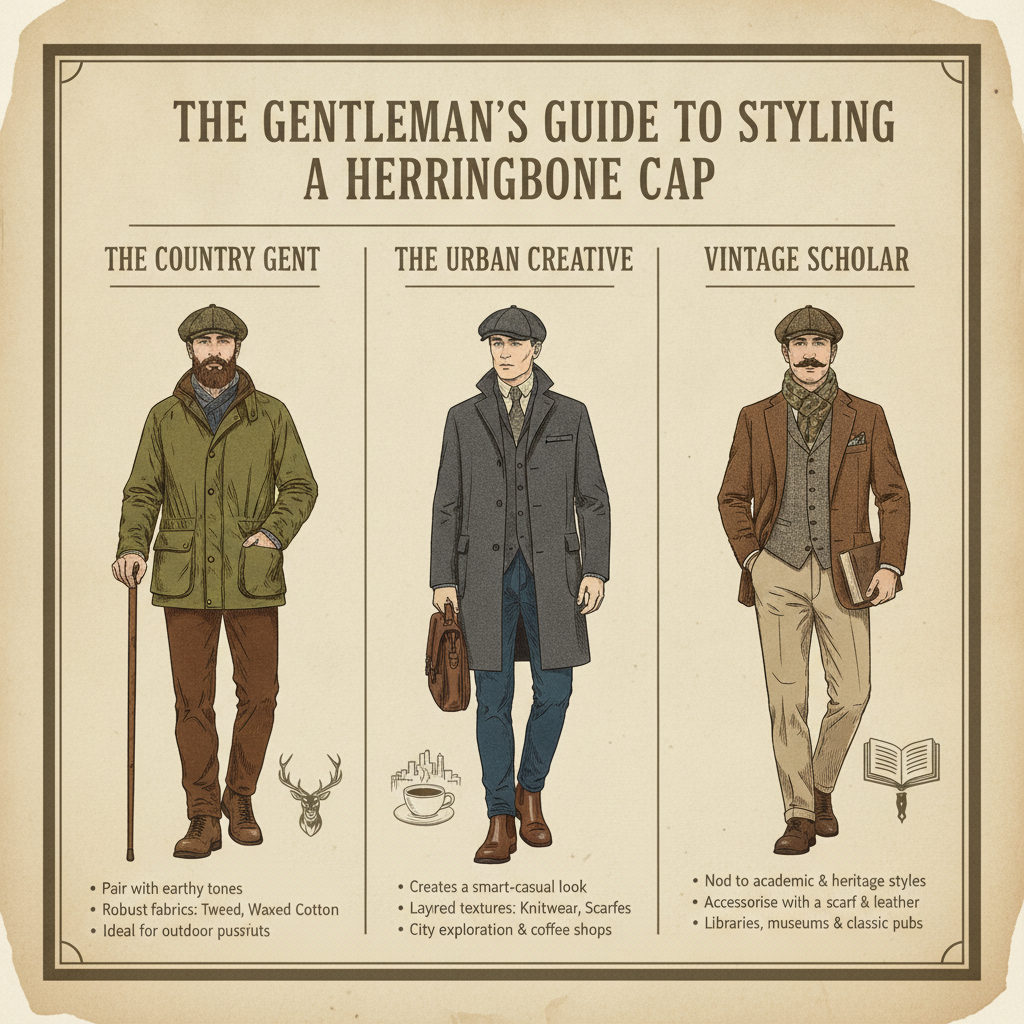
How to Style Your Brown Herringbone Flat Cap: A UK Gentleman’s Guide
The versatility of the brown herringbone flat cap is one of its greatest strengths. It can be dressed up or down with ease, making it suitable for a wide range of occasions. Here’s how to incorporate this classic piece into your modern wardrobe, with a nod to traditional British style.
The Casual Country Look
This is the flat cap in its natural element. Perfect for a weekend walk, a trip to a country pub, or simply a relaxed day out. The key here is texture and earthy tones.
- Outerwear: Pair your cap with a waxed cotton jacket (like a Barbour) or a quilted gilet. A classic tweed sports coat also works wonderfully.
- Knitwear: A chunky Aran knit sweater or a simple merino wool jumper in a colour like forest green, navy, or oatmeal adds warmth and texture.
- Trousers: Opt for corduroys, moleskin trousers, or dark-wash denim.
- Footwear: Complete the look with sturdy leather boots or classic brogues.
The Smart Urban Look
Bringing the flat cap into the city requires a slightly more refined approach. Here, the cap adds a touch of heritage charm to a contemporary outfit. As noted by style experts at GQ UK, the key is to balance the cap’s rustic feel with sleeker pieces.
- Outerwear: A smart wool overcoat in charcoal grey, navy, or camel is the perfect companion. A tailored peacoat or a modern trench coat also works well.
- Mid-layers: Wear it over a fine-gauge knit, an Oxford cloth button-down shirt, or even a casual blazer.
- Trousers: Chinos, tailored wool trousers, or slim-fit dark jeans keep the look sharp and modern.
- Footwear: Chelsea boots, loafers, or minimalist leather trainers will elevate the outfit.
The Vintage-Inspired Aesthetic
For those who admire the style of eras past or the Peaky Blinders aesthetic, the herringbone flat cap is an essential component. The look is about layering and classic tailoring.
- Core Pieces: Start with a three-piece tweed suit or separates, such as a tweed waistcoat and matching trousers. A crisp white shirt with a club collar adds an authentic touch.
- Outerwear: A heavy wool overcoat is a must for colder weather.
- Accessories: Don’t shy away from details like a pocket watch, a wool tie, or leather gloves.
- Footwear: Lace-up work boots or classic Oxford shoes are the ideal foundation for this look.
Choosing the Perfect Fit: A Herringbone Flat Cap Sizing Guide
A poorly fitting cap can ruin an otherwise perfect look. A flat cap should fit snugly on your head but not be tight. It shouldn’t leave a red mark on your forehead, nor should it be so loose that a gust of wind could carry it away. The front of the cap should sit about half an inch above your eyebrows, and the back should rest comfortably on the occipital bone at the back of your head.
How to Measure Your Head
Getting the right size is simple. Follow these steps:
- Get a flexible measuring tape: If you don’t have one, a piece of string and a ruler will work just as well.
- Position the tape: Wrap the tape measure around the widest part of your head. This is usually about mid-forehead, just above your eyebrows, and around the bump at the back of your head.
- Ensure a snug fit: The tape should be snug, but not uncomfortably tight. It should be at the level where you would naturally wear the cap.
- Read the measurement: Take the measurement in centimetres (cm) for the most accurate sizing, as this is the standard used by most hat makers in the United Kingdom.
- Compare to a size chart: Use your measurement to find your corresponding size on the brand’s sizing chart.
Key Takeaways
- Timeless Heritage: The herringbone flat cap is a classic piece of British workwear that has evolved into a versatile style icon.
- Superior Fabric: The combination of a durable herringbone weave and the natural, all-weather properties of wool makes for a superior quality cap.
- Versatile Styling: A brown herringbone cap can be styled for casual country weekends, smart urban settings, and vintage-inspired looks.
- Fit is Paramount: A proper fit is crucial. The cap should be snug but not tight, sitting comfortably just above the eyebrows.
- Proper Care Ensures Longevity: Gentle cleaning, proper drying, and correct storage will keep your wool cap in excellent condition for years.
Typical Flat Cap Sizing Chart
While you should always check the specific chart for the product you’re buying, here is a general guide to how head measurements correspond to standard hat sizes.
| Head Circumference (cm) | UK Hat Size | General Size |
|---|---|---|
| 55 cm | 6 3/4 | Small |
| 57 cm | 7 | Medium |
| 59 cm | 7 1/4 | Large |
| 61 cm | 7 1/2 | X-Large |
| 63 cm | 7 3/4 | XX-Large |
Caring for Your Wool Herringbone Cap: Longevity and Maintenance
A quality wool cap is an investment. With proper care, your G&H Herringbone Flat Cap will last for many years, developing character and becoming an old friend. Wool is a resilient material, but it requires gentle handling.
Routine Cleaning and Upkeep
For day-to-day maintenance, you don’t need to do much. After wearing, you can use a soft-bristled clothes brush to gently brush away any surface dust or dirt. Always brush in the direction of the fabric’s nap. This simple step prevents dirt from settling into the wool fibres.
Dealing with Stains and Spills
If you happen to get a small spot on your cap, act quickly. Gently blot the area with a clean, damp cloth. Avoid rubbing, as this can push the stain deeper into the fibres and damage the weave. For more stubborn or oily stains, a specialised wool cleaner is recommended. Always test any cleaning product on an inconspicuous area first.
Under no circumstances should you put a wool flat cap in a washing machine or tumble dryer. The heat and agitation will cause the wool to felt and shrink, irreparably damaging the cap’s shape and size.
Washing and Drying
If your cap requires a more thorough cleaning, hand washing is the only safe method:
- Prepare: Fill a clean basin with cool or lukewarm water. Add a small amount of mild detergent specifically designed for wool.
- Wash: Submerge the cap and gently squeeze the suds through the fabric. Do not twist or wring the cap. Let it soak for about 10-15 minutes.
- Rinse: Drain the soapy water and refill the basin with clean, cool water. Gently press the water through the cap to rinse out the detergent. Repeat until all suds are gone.
- Dry: Gently squeeze out excess water without wringing. To remove more moisture, roll the cap in a clean, thick towel and press firmly. Reshape the cap to its original form while it’s still damp. Stuff the inside with a small, clean towel to help it hold its shape.
- Air Dry: Place the cap on a flat surface away from direct sunlight or heat sources (like radiators). Allow it to air dry completely, which may take a day or two.
Storage
When not in use, store your cap in a cool, dry place. Placing it on a hat stand or a clean shelf is ideal. Avoid hanging it on a sharp hook, which can distort the shape. For long-term storage, especially during warmer months, place it in a breathable storage box with cedar balls or lavender sachets to deter moths.
Beyond the Brown: Exploring Other Herringbone Cap Styles
While the brown herringbone flat cap is arguably the most classic and versatile option, the world of tweed headwear offers a rich palette of colours and patterns. Understanding these variations can help you expand your collection and tailor your choice to specific outfits or seasons. The history of fashion design, as detailed in resources like Wikipedia’s extensive articles, shows how colour and pattern trends evolve even within classic styles.
Exploring our collection of flat caps reveals a spectrum of possibilities. Other popular choices include:
- Charcoal and Grey Herringbone: A fantastic choice for urban environments. Grey herringbone is sleek, modern, and pairs exceptionally well with black, navy, and other monochrome tones. It’s a slightly more formal option than brown.
- Green and Lovat Herringbone: These colours are deeply rooted in country and sporting traditions, reminiscent of the Scottish Highlands. A green herringbone cap is a perfect match for outdoor attire and earthy colour palettes.
- Navy and Blue Herringbone: A more contemporary take on the classic. Blue herringbone offers a pop of colour while remaining sophisticated. It pairs beautifully with beige, tan, and white.
- Donegal Tweed: While not a herringbone pattern, Donegal tweed is another iconic Irish and British fabric. It’s characterized by its plain weave with colourful flecks or “neps” scattered throughout, offering a different kind of rustic charm.
Your choice of colour can subtly shift the entire mood of your outfit. Building a small collection with a classic brown, a versatile grey, and perhaps a more adventurous green or blue ensures you have the perfect herringbone flat cap for any occasion. This dedication to variety and quality is a core part of our commitment to quality craftsmanship.
Frequently Asked Questions
1. Is a herringbone flat cap still in style in the UK?
Absolutely. The herringbone flat cap is a timeless classic that has seen a significant resurgence in popularity. It’s considered a staple of British heritage style and is worn by men of all ages. Its presence in popular culture and on fashion icons has solidified its place as a stylish and relevant accessory in the modern wardrobe.
2. What is the difference between tweed and herringbone?
Tweed is the type of fabric, typically a rough, woollen cloth, closely associated with Scotland and Ireland. Herringbone is the specific V-shaped pattern woven into the fabric. So, you can have a herringbone pattern on many types of fabric, but a “herringbone tweed” refers specifically to tweed cloth that has been woven with this distinctive zig-zag pattern.
3. How should a flat cap fit?
A flat cap should fit snugly but not be tight. It should sit comfortably on your head without causing pressure or leaving a mark. A good rule of thumb is that it should be secure enough to not fall off if you lean forward, but loose enough that you can fit a finger between the cap and your head. The peak should sit low on your forehead, just above the eyebrows.
4. Can you wear a wool flat cap in the summer?
While wool is an excellent insulator for cold weather, it is also naturally breathable. A high-quality wool flat cap can be comfortable on cooler spring and autumn days in the United Kingdom. For the height of summer, however, you might prefer a cap made from a lighter material like linen or cotton for maximum breathability.
5. What does wearing a flat cap say about you?
Wearing a flat cap often suggests an appreciation for classic style, heritage, and quality craftsmanship. It can convey a sense of understated confidence and individuality. Depending on how it’s styled, it can project a rugged, outdoorsy persona, a sharp, intellectual look, or a creative, modern aesthetic. Ultimately, it signals a move away from disposable fashion towards timeless, enduring pieces.
Conclusion: An Essential British Accessory
The G&H Wool Herringbone Flat Cap in Brown is far more than a simple accessory; it’s a connection to a rich sartorial history and a mark of discerning taste. Its blend of rugged practicality and refined style makes it one of the most versatile pieces a man can own. Whether you’re aiming for a look that is classic, contemporary, or a unique blend of both, this cap provides the perfect finishing touch.
By investing in a quality-made wool cap, you are not just buying headwear—you are acquiring a piece of heritage that, with proper care, will serve you well for years to come. It’s an emblem of the enduring style of the United Kingdom, ready to be made part of your own story.
Ready to embrace this timeless style? Explore the G&H Wool Herringbone Flat Cap and other classic headwear in our curated collection at Maz Accessories today.
