
Fedora vs Panama Hat: A UK Style Guide to Choosing Right

Fedora vs Panama Hat: Your Definitive UK Style Guide
In the world of classic headwear, few styles are as iconic, or as commonly confused, as the fedora and the Panama hat. The great Fedora vs Panama Hat debate is one we often hear, with many style-conscious individuals in the United Kingdom wondering which hat suits which occasion. While they share a similarly elegant silhouette, these two hats are worlds apart in terms of material, origin, and seasonal suitability. This comprehensive guide will demystify the two, exploring their rich histories, defining characteristics, and ideal styling for the discerning UK resident, ensuring you make the perfect choice every time.
Table of Contents
- 1. What is a Fedora? Deconstructing the Classic
- 2. What is a Panama Hat? The Ecuadorian Masterpiece
- 3. Fedora vs Panama Hat: The Head-to-Head Comparison
- 4. Beyond the Basics: Trilby vs Fedora vs Panama Hat
- 5. How to Style and Care for Your Hat in the UK Climate
- 6. Choosing Your Perfect Hat at Maz Accessories
- 7. Frequently Asked Questions
What is a Fedora? Deconstructing the Classic
The fedora is a quintessentially classic hat, evoking images of Old Hollywood glamour, Prohibition-era gangsters, and timeless cinematic heroes like Indiana Jones. Its enduring appeal lies in its versatility and structured elegance, making it a staple for cooler weather and more formal occasions across the United Kingdom. But to truly understand the fedora, we must look past the pop culture references and delve into its specific characteristics.
Origins: From a Theatrical Stage to Global Streetwear
Contrary to popular belief, the fedora’s story doesn’t begin with male film stars. It actually started as a piece of women’s fashion. The hat’s name comes from the title of an 1882 play by French author Victorien Sardou, titled ‘Fédora’. The legendary actress Sarah Bernhardt played the lead role, Princess Fédora Romanoff, and wore a soft-brimmed, centre-creased hat on stage. This sparked a trend among women’s rights activists, and the fedora became a symbol of the movement.
It wasn’t until the 1920s that the fedora was widely adopted by men, notably by Prince Edward of Wales in 1924, who favoured it over the stiffer bowler hats of the time. Its popularity soared, becoming the dominant men’s hat style by the mid-20th century. Its ability to be worn with a suit, protect from the elements, and be easily removed made it both practical and stylish for the modern man.
Defining Characteristics of a Fedora
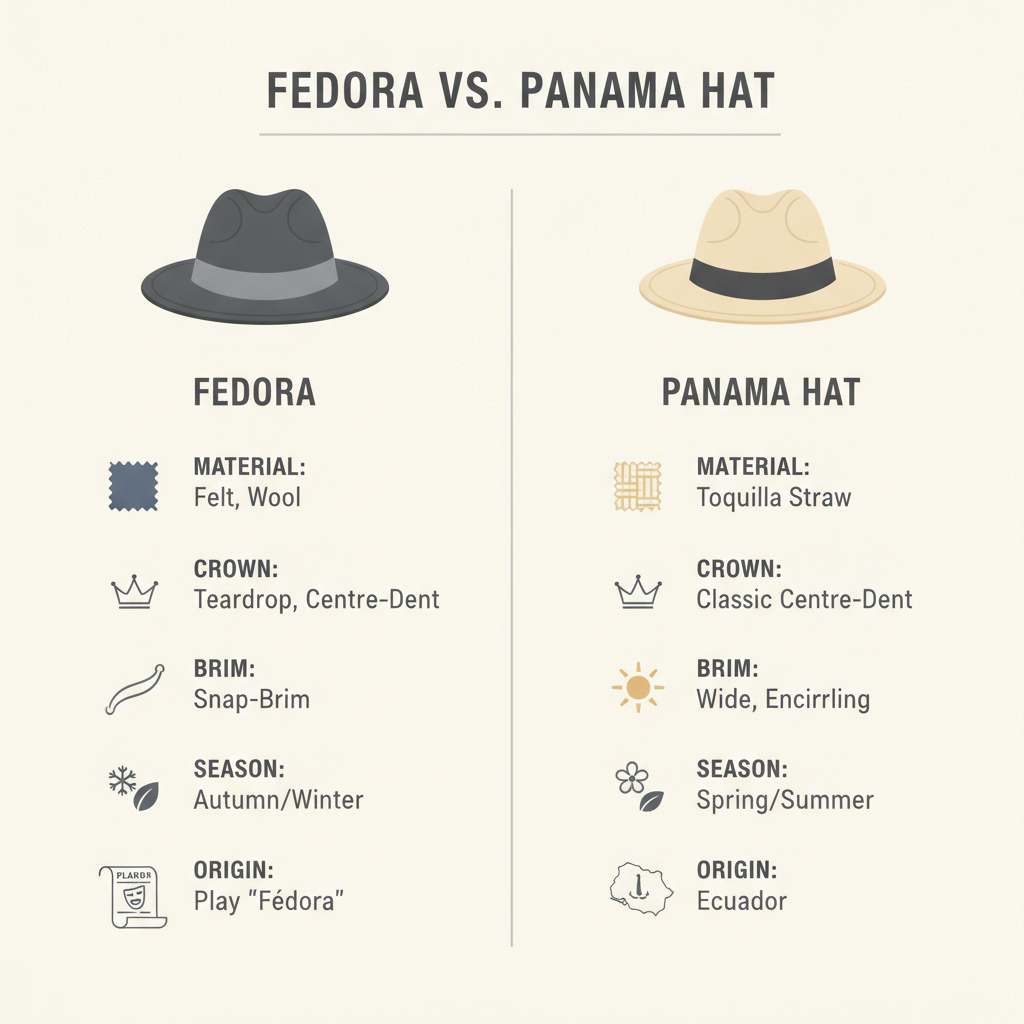
A true fedora is defined by a specific set of features that distinguish it from other hats. While modern interpretations vary, the classic elements remain consistent. Understanding these is key in the Fedora vs Panama Hat distinction.
- Material: The most significant differentiator is the material. A traditional fedora is made from felt. This felt is most commonly derived from wool, but higher-end versions can be made from beaver, rabbit, or other animal furs. This robust material makes it ideal for the cooler, often damp, UK weather in autumn and winter.
- The Crown: A fedora’s crown is typically indented. The most common style is the ‘teardrop’ crown, which looks like a teardrop from above. Another popular style is the ‘centre-dent’ or ‘centre-crease’ crown, which has a single crease down the middle. Most fedoras also feature ‘pinches’ on the front two sides of the crown, which provide a natural place to hold the hat when putting it on or taking it off.
- The Brim: The brim of a fedora is soft and pliable, known as a ‘snap-brim’. This means it can be snapped down in the front and up in the back, allowing the wearer to style it in various ways. The brim width typically ranges from 2 to 2.5 inches, though this can vary.
- The Hatband: Almost all fedoras are finished with a ribbon hatband, often tied in a flat bow with a small flourish on the side. This adds a touch of classic detail and is a hallmark of the style.
When to Wear a Fedora in the UK
The fedora’s felt construction makes it a perfect accessory for the cooler months. It’s an excellent choice for autumn race days, winter weddings, or simply adding a touch of sophistication to a smart-casual outfit. In the UK, a wool felt fedora pairs beautifully with tweed jackets, wool overcoats, and tailored suits. It bridges the gap between formal and casual, elevating a simple outfit and completing a formal one. However, wearing a dark, heavy felt fedora on a sunny day in July would be a stylistic and practical misstep – that’s where its summer counterpart comes in.
What is a Panama Hat? The Ecuadorian Masterpiece
Enter the Panama hat: the epitome of summer elegance, lightweight comfort, and artisanal craftsmanship. Despite its name, this iconic hat has no connection to Panama in its origin. It is, in fact, a product of Ecuador’s rich weaving traditions. Its light colour and breathable material make it the undisputed champion of warm-weather headwear, perfect for everything from a garden party in Kent to a day at Wimbledon.
The Misnomer: A Hat from Ecuador, Not Panama
The story of the Panama hat’s name is a fascinating piece of history. These hats have been woven from the paja toquilla (toquilla palm straw) in the coastal regions of Ecuador for centuries. The craft is so integral to their culture that UNESCO recognized it as an Intangible Cultural Heritage of Humanity.
The name ‘Panama hat’ gained global traction during the California Gold Rush in the mid-19th century. Prospectors travelling to California via the Isthmus of Panama would buy these lightweight, practical hats in Panama’s bustling markets to shield them from the sun. The name stuck. Its fame was further cemented when U.S. President Theodore Roosevelt was famously photographed wearing one while visiting the construction of the Panama Canal in 1906. The image was published worldwide, and the ‘Panama hat’ became a global icon.
Defining Characteristics of a Panama Hat
The Panama hat’s identity is intrinsically linked to its material and the incredible skill required to create it. Its features are tailored for sun protection and breathability.
- Material: The single most important feature is that a genuine Panama hat is always made from the fibres of the toquilla palm. The straw is hand-split into fine strands and then meticulously woven. Paper or synthetic straw hats are not authentic Panama hats.
- Weave Quality: The quality, and therefore the price, of a Panama hat is determined by the fineness and tightness of its weave. This is often measured in ‘grades’. A higher grade means more weaves per square inch, resulting in a lighter, more flexible, and more durable hat. The finest weaves, known as Montecristi superfino, can take months to complete and feel as soft as silk.
- Colour: Traditional Panama hats are light in colour, ranging from natural off-white to a toasted beige. This is a practical feature, as light colours reflect sunlight and keep the wearer’s head cool.
- The Crown and Brim: While sharing similar crown shapes with the fedora (like the centre-dent), the Panama hat is defined by its function. The brim is typically wider than a fedora’s, designed to provide ample shade for the face and neck. Unlike the ‘snap-brim’ of a fedora, the brim of a Panama hat is usually shaped once and holds its form.
When to Wear a Panama Hat in the UK
A Panama hat is your go-to for any smart outdoor event during the British spring and summer. Think of the Royal Ascot, Henley Royal Regatta, summer weddings, or simply a stylish pub garden lunch. It pairs perfectly with linen suits, light-coloured chinos, crisp shirts, and loafers. It is the ultimate accessory for sophisticated summer dressing, offering both sun protection and an air of effortless charm. Wearing one with a heavy wool coat in November would be as out of place as a felt fedora at the beach.
Fedora vs Panama Hat: The Head-to-Head Comparison
To settle the Fedora vs Panama Hat debate once and for all, a direct comparison is essential. While they may look similar from a distance, their core differences in material, function, and formality are stark. This table breaks down the key distinctions for a clear, at-a-glance understanding.
| Feature | Fedora | Panama Hat |
|---|---|---|
| Primary Material | Felt (wool, beaver, rabbit fur) | Toquilla Palm Straw |
| Country of Origin | Popularised in Europe (concept from a French play) | Ecuador |
| Primary Season | Autumn / Winter | Spring / Summer |
| Function | Warmth, protection from rain/snow, formal style | Sun protection, breathability, summer style |
| Brim Style | Soft ‘snap-brim’, can be styled up or down | Structured brim, typically wider for shade |
| Colour Palette | Darker, earthy tones (grey, black, brown, navy, green) | Light, natural tones (ivory, white, beige, tan) |
| Cultural Vibe | Classic, mysterious, urban, detective noir, jazz era | Relaxed, sophisticated, tropical, colonial, holiday |
The core takeaway is this: the choice between a fedora and a Panama hat is not a matter of which is ‘better’, but which is appropriate. The material dictates the season. A felt fedora provides warmth and structure for the colder, wetter months, making it a functional and stylish choice for UK autumns and winters. Conversely, a straw Panama hat offers crucial sun protection and ventilation, making it an indispensable accessory for the warmer, sunnier days of a British summer. Owning both is the mark of a truly well-rounded wardrobe.
Beyond the Basics: Trilby vs Fedora vs Panama Hat
To add another layer to the discussion, we must address a common point of confusion: the trilby. Often mistaken for a fedora, the trilby is a distinct style with its own characteristics and should also be considered when building a hat collection.
The Trilby: The Fedora’s Narrow-Brimmed Cousin
Like the fedora, the trilby gets its name from literature, specifically the 1894 novel ‘Trilby’ by George du Maurier. It rose to prominence in the 1960s, seen as a more modern, streamlined version of the classic fedora.
The key differences are in the brim and how it’s worn:
- Brim Size: The trilby has a much shorter, ‘stingy’ brim compared to the fedora. This brim is permanently fixed in a snapped-down position at the front and sharply turned up at the back.
- Crown Height: Trilbies often have a slightly shorter crown than a traditional fedora, contributing to a more compact look.
- How It’s Worn: A fedora is typically worn level on the head, with the brim providing some coverage over the eyes. A trilby, due to its short brim, is worn further back on the head, exposing the forehead.
While the trilby enjoyed a resurgence in the early 2000s, many style purists consider the fedora to be the more timeless and elegantly proportioned choice. In the context of our main comparison, a trilby can be made of felt (like a fedora) or straw (like a Panama), but its defining feature is its short, sharply angled brim.
How to Choose: Practical UK Scenarios
Let’s apply this knowledge to some typical British situations:
- Event: A November wedding in the Cotswolds.
Choice: A dark grey or navy wool fedora. It will complement a tailored suit or tweed, provide warmth, and stand up to potential drizzle. - Event: A sunny July afternoon at the Goodwood Festival of Speed.
Choice: A finely woven Panama hat. It will protect you from the sun, keep you cool, and pair perfectly with a linen blazer and chinos. - Event: A trendy city break in Manchester in October.
Choice: A classic brown fedora. It adds an edge to a smart-casual outfit of jeans, a good knit, and a leather jacket. - Event: A casual weekend barbecue in your garden.
Choice: A more relaxed, wider-brimmed Panama hat. It’s all about practical sun protection and effortless style.
Understanding these nuances ensures your headwear not only looks good but is also fit for purpose. For more detailed guidance, explore our complete collection of men’s and women’s hats to find the perfect style for you.
How to Style and Care for Your Hat in the UK Climate
Investing in a quality hat like a felt fedora or a genuine Panama hat requires understanding how to style it and, just as importantly, how to care for it. The variable UK climate presents unique challenges, from sudden downpours to unexpected heatwaves.
Styling a Fedora for the British Gent or Lady
A fedora is a statement piece that can elevate an entire outfit. For men, pair a classic grey or brown fedora with a wool overcoat, a tailored suit, or a tweed sports jacket. It adds a layer of intentionality and polish. For a more modern take, a fedora can work with a quality bomber jacket and dark denim. For women, a fedora adds a chic, androgynous edge to an outfit. Try pairing a camel-coloured fedora with a trench coat and ankle boots, or a black fedora with a leather jacket and a flowing dress for a bohemian-rocker vibe.
Styling a Panama Hat for a British Summer
The Panama hat is synonymous with relaxed elegance. For men, the classic pairing is a light-coloured linen or cotton suit. It also works brilliantly with simple chinos and a polo shirt or a short-sleeved button-down. The key is to keep the rest of the outfit light and breezy. For women, a Panama hat is incredibly versatile. It looks just as good with a floral summer dress and sandals as it does with white linen trousers and a simple Breton top. It’s the perfect finishing touch for a sophisticated yet effortless summer look.
Essential Hat Care Tips
Proper care will ensure your hat lasts for years, becoming a cherished part of your wardrobe. Here are some essential tips for both types:
- Storage: Store your hats upside down on their crown on a flat surface, or on a dedicated hat stand. This prevents the brim from flattening and losing its shape. Keep them in a cool, dry place away from direct sunlight. A hat box is ideal for long-term storage.
- Cleaning a Felt Fedora: For light dust, use a soft-bristled hat brush, always brushing counter-clockwise. For minor stains, you can use a slightly damp cloth or a specialized felt cleaning sponge. Never saturate the felt with water. If your fedora gets wet in the rain, shake off excess water, reshape it as best you can, and let it air dry naturally away from direct heat. For more information on fabric care, authoritative sources like the Victoria and Albert Museum offer excellent conservation guides.
- Cleaning a Panama Hat: Toquilla straw is more delicate. For dust, a gentle wipe with a clean, dry, or slightly damp white cloth is sufficient. For smudges, a simple pencil eraser can often work wonders. If a stain persists, a tiny amount of mild soap and water on a cloth can be used, but test it on an inconspicuous area first.
- Reshaping: If your hat loses its shape, steam can be your best friend. The steam from a kettle or a garment steamer can make the material pliable. Gently reshape the hat with your hands (wearing gloves to protect from heat) and then let it cool and dry in that shape.
Key Takeaways
- The Fedora vs Panama Hat debate is primarily about material and season. Fedoras are for autumn/winter, made of felt. Panama hats are for spring/summer, made of Toquilla straw.
- A true Panama hat originates from Ecuador, not Panama. Its name is a historical quirk.
- A fedora is defined by its felt material, indented crown, and soft ‘snap-brim’. It’s suited for formal and smart-casual wear in cooler weather.
- A Panama hat is defined by its hand-woven straw, light colour, and wider brim for sun protection. It’s ideal for warm-weather events.
- The trilby is a separate style, often confused with the fedora, but has a much shorter, more sharply angled brim.
- Proper care is crucial. Handle hats by the brim, store them correctly, and use appropriate cleaning methods for felt and straw to ensure longevity.
Choosing Your Perfect Hat at Maz Accessories
Now that you’re an expert on the differences between a fedora and a Panama hat, the next step is finding the perfect one for you. At Maz Accessories, we pride ourselves on curating a collection of high-quality headwear that honours tradition while embracing modern style. Whether you’re searching for a sophisticated wool felt fedora for the city or an authentic, hand-woven Panama hat for your next summer holiday, our selection is designed to meet the highest standards of quality and elegance.
We understand that choosing a hat is a personal experience. The right hat should not only suit the occasion but also complement your face shape and personal style. Our team is passionate about helping you find that perfect match. We source our hats from skilled artisans and reputable makers, ensuring that every piece we offer is crafted with care and built to last. We believe a good hat is an investment in your personal style, a companion for many years of memorable occasions.
Browse our online collections to discover a world of timeless style. If you have any questions or need personalized advice on sizing or styling, please do not hesitate to reach out. Our experts are always happy to assist you. You can find our details on the contact us page, and we look forward to helping you make the perfect choice.
Frequently Asked Questions
Can you wear a Panama hat in winter in the UK?
While there are no strict fashion rules, it’s generally not recommended. A Panama hat is made of straw and designed for sun protection and breathability, making it functionally and stylistically out of place in the cold, damp UK winter. A felt hat like a fedora is a much more appropriate and practical choice for the season.
Is a fedora too formal for everyday wear?
Not at all! While a fedora can certainly be worn with a formal suit, it’s also incredibly versatile. A wool fedora in a colour like brown or grey can be a stylish addition to a smart-casual outfit, such as chinos, a knit sweater, and a smart coat. It’s a great way to add a touch of personality and polish to an everyday look in the autumn and winter.
How do I know my hat size?
To find your hat size, use a soft tape measure and wrap it around your head, about 1cm above your ear, across the mid-forehead. The measurement in centimetres is your hat size. It’s important to get a snug but comfortable fit. Most quality hat retailers, including Maz Accessories, provide a sizing guide to help you convert your measurement to the correct size.
What’s the difference between a cheap Panama hat and an expensive one?
The primary difference is the quality of the weave. An expensive, high-grade Panama hat (like a Montecristi) has a very fine, tight, and consistent weave made from select Toquilla straw, which can take a master weaver months to complete. This results in a hat that is incredibly lightweight, flexible, and durable. Cheaper versions, or imitations made from paper or other materials, will have a coarser, looser weave and will not have the same longevity or refined feel.
Are fedoras still in style in the UK?
Yes, absolutely. The fedora is a timeless classic that transcends fleeting trends. While its peak mainstream popularity was in the mid-20th century, it remains a staple for stylish individuals. Today, it is seen as a sophisticated accessory that demonstrates a confident sense of personal style. It is consistently popular at formal events, race days, and as part of the country-chic aesthetic in the UK.
Conclusion: Two Icons, Two Purposes
The Fedora vs Panama Hat question is not about choosing a winner, but about appreciating two distinct champions of headwear, each with its own arena. The fedora is the sophisticated stalwart of the cooler months, its felt construction offering warmth, structure, and a touch of noirish charm. The Panama hat is the undisputed king of summer, its hand-woven straw providing cool, breathable elegance under the sun.
By understanding their unique materials, origins, and ideal seasons, you can confidently build a hat collection that is both stylish and practical for the varied British climate. A hat is more than just an accessory; it’s the final, defining touch to an outfit, a statement of personal style, and a nod to a rich history of craftsmanship. Are you ready to find your perfect statement piece?
Explore our curated collection of premium fedoras and authentic Panama hats at Maz Accessories and find the perfect addition to your wardrobe today.
