
Hat Display Ideas Retail: UK & US Guide to Boost Sales
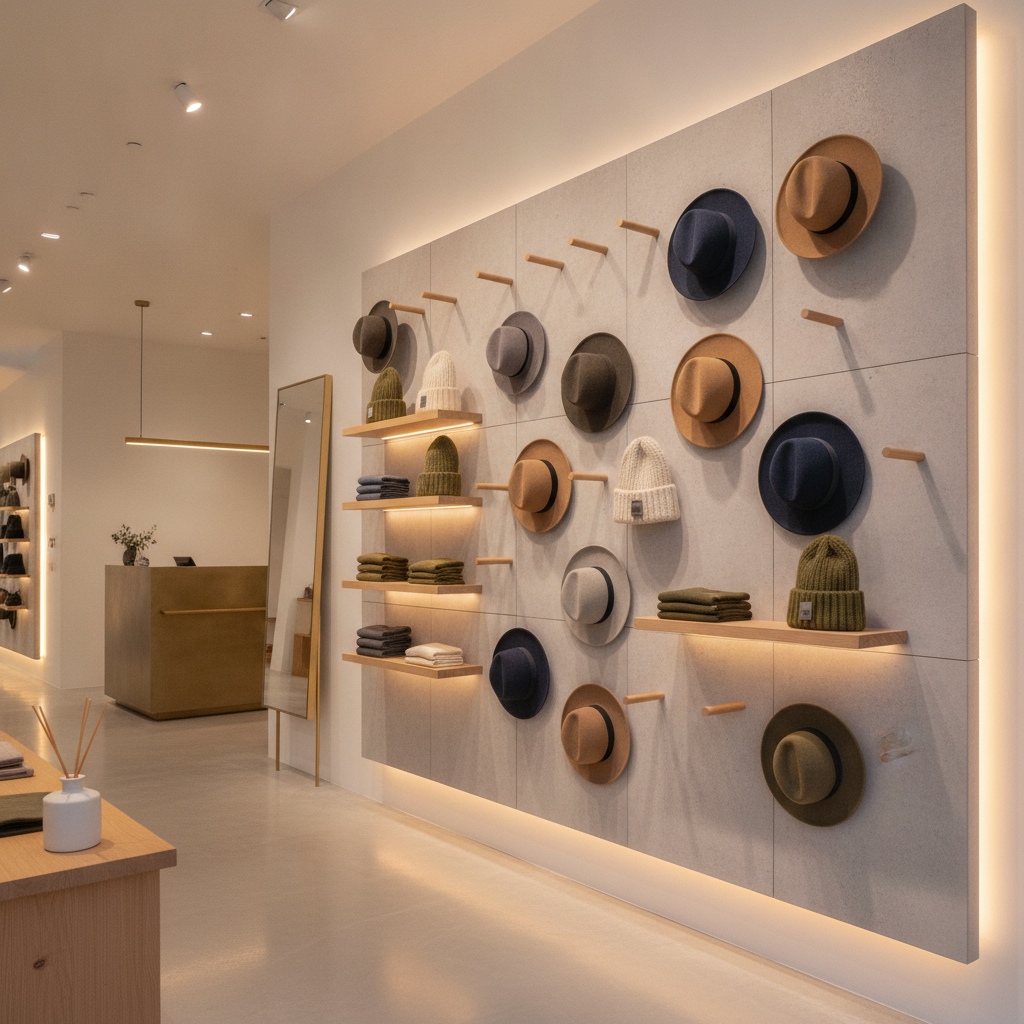
The Ultimate Guide to Hat Display Ideas for Your Retail Store
In the competitive retail landscape of the United Kingdom and the United States, visual merchandising can be the silent salesperson that converts a browsing customer into a loyal patron. When it comes to accessories, particularly hats, presentation is paramount. This guide provides comprehensive hat display ideas for retail environments, offering actionable strategies to captivate customers, enhance your brand’s story, and ultimately, drive sales. Whether you’re a small boutique in Manchester or a large department store in New York, effectively showcasing your headwear is a crucial step towards standing out.
Table of Contents
- 1. The Psychology of Retail Displays: Why Hat Presentation Matters
- 2. Foundational Hat Display Ideas for Retail Success
- 3. Advanced & Creative Hat Merchandising Strategies
- 4. Optimising Your Store Layout for Maximum Hat Sales
- 5. Lighting Your Hat Displays for Maximum Impact
- 6. Adapting Displays for Different Hat Types
- 7. Essential Maintenance and Upkeep for Your Displays
- 8. Frequently Asked Questions
The Psychology of Retail Displays: Why Hat Presentation Matters
Before diving into specific fixtures and arrangements, it’s essential to understand the ‘why’ behind effective visual merchandising. A well-executed display does more than just hold products; it communicates value, tells a story, and creates a desire.
This highlights the power of your physical environment. For hats, which are a highly personal and style-driven item, the display must allow customers to envision themselves wearing the product. It’s not just about showing a hat; it’s about selling a look, an attitude, or a solution to a problem (like staying warm or sun protection).
In the UK and US markets, consumers are increasingly seeking experiences, not just products. Your hat display is a key touchpoint in that customer experience. A cluttered, uninspired display suggests low quality, whereas a clean, creative, and well-lit setup elevates the perceived value of each hat. It transforms a simple beanie from a commodity into a must-have winter accessory.
Communicating Value and Quality
The context you create—the fixtures, the lighting, the spacing—all contribute to the narrative of quality. Proper spacing is crucial; giving each hat ‘breathing room’ suggests it is a unique and valuable item, while overcrowding can lead to a perception of being a discount or clearance item.
Telling a Brand Story
Your displays are a canvas for your brand’s identity. Are you a brand that embodies urban street style, classic British heritage, or bohemian festival vibes? Your hat displays should reflect this. Using props, backdrops, and signage that align with your brand’s aesthetic creates a cohesive and immersive shopping experience. This storytelling makes your brand more memorable and helps you connect with your target audience on an emotional level.
Foundational Hat Display Ideas for Retail Success
These foundational hat display ideas for retail are the building blocks for creating an engaging and profitable headwear section in your store.
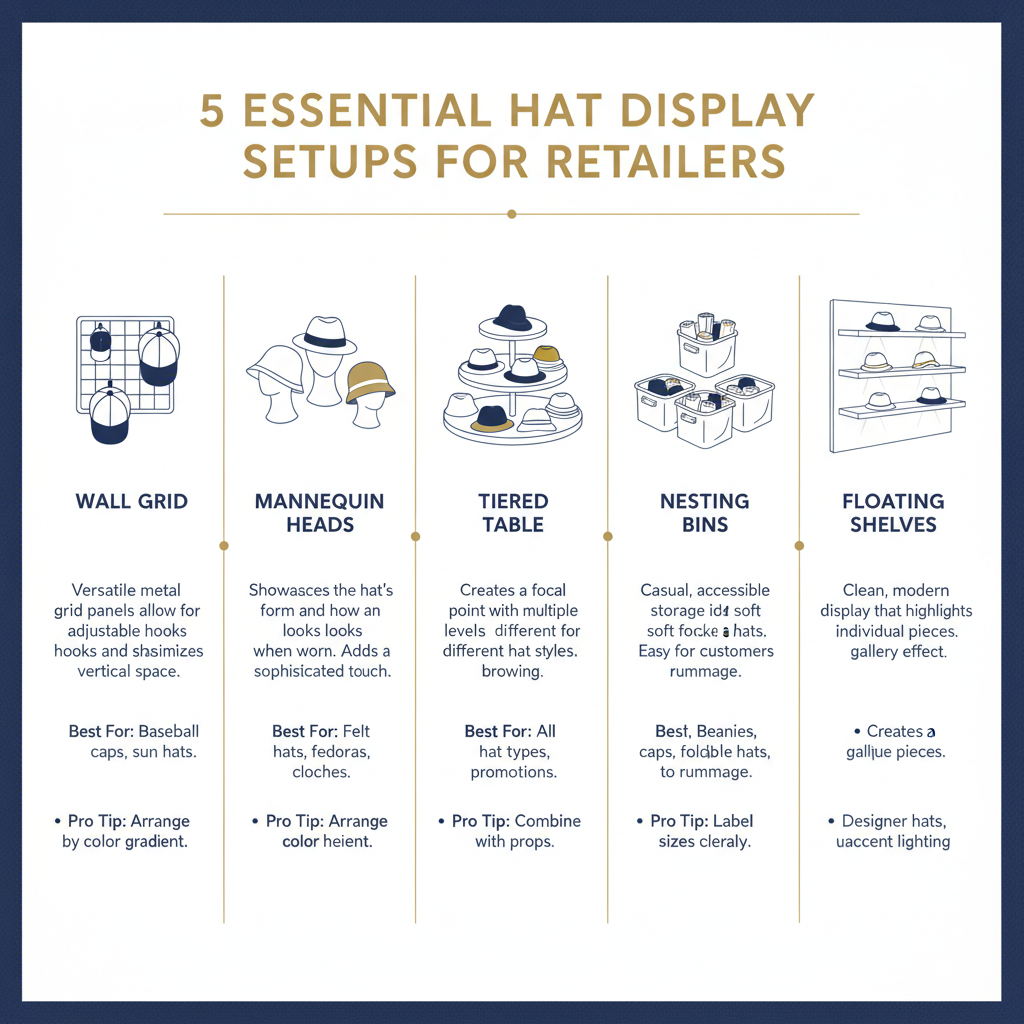
Wall-Mounted Displays: Maximising Vertical Space
Your walls are some of the most valuable real estate in your store. Utilising vertical space not only draws the customer’s eye upwards but also frees up precious floor space for other fixtures and for customers to move around comfortably. Wall displays are perfect for creating a high-impact ‘hat wall’ that can serve as a central feature.
- Slatwall & Gridwall Systems: These are the workhorses of retail. They offer incredible flexibility, allowing you to easily move hooks, shelves, and waterfalls to accommodate new stock or refresh your layout. Use a mix of single-prong hooks for baseball caps and waterfalls for stacking beanies.
- Pegboards: Offering a more modern or industrial aesthetic, pegboards provide a similar level of versatility to slatwall. They are excellent for creating visually interesting, geometric patterns with your hats. Consider painting the pegboard to match your brand colours.
- Individual Hooks & Knobs: For a minimalist or boutique feel, mounting individual hooks, knobs, or even decorative brackets directly onto the wall can create a beautiful, curated look. This method is ideal for showcasing premium hats, giving each one its own space to shine.
Mannequin Heads & Busts: Creating Realistic Context
Hats are designed to be worn on a head, so displaying them on one is the most effective way to show their true shape, fit, and style. Mannequin heads provide immediate context that helps customers visualize how the hat will look on them.
Invest in a variety of mannequin heads to match your brand’s aesthetic. Options range from abstract, glossy white heads for a modern look, to realistic heads for a classic feel, or even fabric-covered or wooden heads for a more rustic or artisanal vibe. Use full busts to cross-merchandise hats with scarves or necklaces, creating a complete look that can inspire a larger purchase. Position these at eye-level on shelves or tables for maximum impact.
Tiered Stands & Risers: Building Height and Interest
Flat, single-level displays are visually boring. Creating different levels on your tables and shelves is a core principle of effective visual merchandising. Tiered stands and risers are essential tools for achieving this.
- Multi-Level Stands: Freestanding tiered displays, often made of metal or acrylic, can hold multiple hats in a compact footprint, making them perfect for countertops or feature tables.
- Nesting Tables: Using sets of tables of varying heights allows you to create a dynamic, layered presentation on the shop floor.
- Acrylic or Wooden Boxes: Simple risers like boxes or blocks can be used on any flat surface to elevate certain hats, drawing attention to new arrivals or best-sellers. This simple technique breaks up the monotony and guides the customer’s eye through the display.
Advanced & Creative Hat Merchandising Strategies
Once you’ve mastered the fundamentals, it’s time to inject personality and creativity into your displays. These advanced strategies will help you create memorable experiences that differentiate your store from the competition and encourage social sharing.
Thematic & Storytelling Displays
Go beyond simply grouping by colour or style. Create displays that tell a story or evoke a specific mood. This narrative approach is far more engaging for shoppers.
Example Themes for a UK/US Retailer:
- “A Weekend in the Cotswolds”: Feature tweed flat caps, wax cotton bucket hats, and wool fedoras. Use props like antique maps, wicker picnic baskets, and faux autumn leaves. This story appeals to customers interested in classic British country style.
- “New York City Street Style”: Showcase beanies, baseball caps, and trendy bucket hats. Use a backdrop of a cityscape photograph, concrete blocks as risers, and neon signage to create an urban, edgy vibe.
- “Summer Festival Season”: Create a vibrant display with wide-brim straw hats, colourful fascinators, and bohemian-style fedoras. Use props like faux grass, floral garlands, and band posters.
Interactive & Try-On Stations
Encourage customers to touch, feel, and try on your hats. An interactive station can break down barriers and increase the likelihood of a sale. A dedicated ‘Try-On Bar’ should include:
- High-Quality Mirrors: Provide multiple, full-length mirrors, not just small countertop ones. Customers want to see how the hat looks with their entire outfit.
- Excellent Lighting: The lighting at your try-on station should be flattering. Use warm, diffused light to avoid harsh shadows. A ring light can be a modern, fun addition that also encourages selfies.
- Comfort and Convenience: Add a small stool or chair and hooks for customers to hang their bags or coats. Ensure there’s enough space to move around comfortably.
This focus on the customer experience is supported by retail experts. As noted by Shopify’s guide to visual merchandising, creating interactive experiences can significantly boost engagement and sales.
Using Unconventional Props and Fixtures
Step outside the world of traditional retail fixtures to create displays that are truly unique. Repurposing everyday objects can be a cost-effective way to create a high-impact look.
- Ladders: An old wooden ladder leaned against a wall can be used to hang hats from its rungs.
- Crates and Pallets: Wooden crates can be stacked to create a rustic, multi-level display.
- Vintage Furniture: An old dresser, bookshelf, or coat rack can be repurposed to display hats in a charming, home-like setting.
- Branches or Antlers: For a natural or rustic theme, securely mounted tree branches or antlers can serve as unique hooks for hats.
Optimising Your Store Layout for Maximum Hat Sales
Even the most beautiful display will be ineffective if it’s placed in the wrong part of your store. Strategic placement of your hat collection is crucial for driving traffic to the section and maximizing exposure. The principles of store layout are universal, but can be adapted for the specific shopping habits seen in the UK and US.
High-Traffic Zones vs. Destination Areas
Understand the flow of traffic in your store. The area just inside the entrance is known as the ‘decompression zone’, and shoppers often miss products placed here. The prime real estate is just beyond this zone, to the right (as most people naturally turn right upon entering a store). This is a great spot for a ‘power wall’ of your best-selling or most visually striking hats.
Seasonal items, like winter beanies or summer sun hats, should be placed in high-traffic pathways. Core, year-round styles like classic fedoras can be located in a ‘destination’ area further into the store, encouraging customers to explore your full offering. To learn more about our business and philosophy, you can visit the Maz Accessories about page.
Grouping Strategies: Style, Colour, or Brand
How you group your hats can either help or hinder the customer’s shopping journey. There are several effective strategies:
| Grouping Method | Description | Best For |
|---|---|---|
| By Colour | Arranging hats in a colour gradient or in distinct colour blocks. This creates a strong visual impact. | Stores with a wide range of colours in a few key styles (e.g., beanies, baseball caps). |
| By Style | Grouping all fedoras together, all beanies together, etc. This is the most common and intuitive method for customers. | Most retail environments, as it helps customers easily find the type of hat they are looking for. |
| By Brand | Creating dedicated sections for different brands. | Stores that carry well-known, high-demand brands that customers seek out by name. |
The Power of Cross-Merchandising
Cross-merchandising is the practice of displaying products from different categories together to increase the average sale value. Hats are the perfect item for this. Displaying hats alongside complementary products can inspire customers to purchase a complete outfit.
- Place winter hats like beanies and bobble hats next to scarves, gloves, and winter coats.
- Position summer sun hats and visors near sunglasses, beach towels, and swimwear.
- Display formal hats and fascinators alongside occasion wear, dresses, and smart jackets.
Lighting Your Hat Displays for Maximum Impact
Lighting is one of the most powerful tools in a visual merchandiser’s arsenal, yet it is often overlooked. The right lighting can make colours pop, highlight textures, create mood, and guide the customer’s attention. Poor lighting, on the other hand, can make even the highest quality products look dull and unappealing.
The Role of Accent Lighting
While general ambient lighting illuminates your store, accent lighting is used to highlight specific products or displays. Track lighting with adjustable spotlights is an excellent choice for hat displays. Aim spotlights at your feature walls, mannequin heads, or key products on a table display. This creates contrast and drama, drawing the eye exactly where you want it. According to a report by the U.S. Department of Energy, effective accent lighting can significantly enhance product appeal.
Colour Temperature and CRI
The ‘colour temperature’ of light, measured in Kelvin (K), affects the mood of your space. Warm light (2700K-3000K) creates a cozy, inviting atmosphere, which works well for materials like wool, felt, and tweed. Cool light (4000K-5000K) is brighter and more energizing, which can be effective for sportswear or caps with vibrant colours.
Also, pay attention to the Colour Rendering Index (CRI) of your bulbs. A CRI of 90 or above will ensure that the colours of your hats are rendered accurately, so a navy blue hat doesn’t look black under the store lights.
Adapting Displays for Different Hat Types
Not all hats are created equal, and their display methods shouldn’t be either. Tailoring your display to the specific type of hat is key to preserving its shape and showcasing its unique features. This is a critical detail for any retailer serious about their hat display ideas for retail strategy.
Displaying Fedoras and Structured Hats
Structured hats like fedoras, trilbies, and homburgs have a defined shape that must be maintained. Improper display can lead to crushed brims and dented crowns.
- Best Methods: Mannequin heads are ideal as they provide full support. If using shelves, ensure they are deep enough to accommodate the full brim without it being bent against a wall. Individual wall pegs that support the hat from the inside of the crown are also an excellent choice.
- Avoid: Stacking them on top of each other or using clips that can dent the brim.
Merchandising Beanies and Soft Hats
Soft hats like beanies, bobble hats, and berets offer much more flexibility in display.
- Best Methods: They can be neatly folded and stacked on shelves or tables. Displaying them in bins, baskets, or crates can create a ‘help yourself’ feel that encourages browsing. Waterfall hooks on a slatwall are perfect for hanging multiple beanies. You can also place them on mannequin heads to show how they fit.
- Pro Tip: Use colour blocking when stacking or binning beanies to create a visually appealing, organized look.
Showcasing Fascinators and Occasion Headwear
Fascinators and other delicate occasion headwear are often intricate and command a higher price point. They require an elegant and secure display.
- Best Methods: Display each piece individually. Tall, slender stands or mannequin heads are perfect. A glass display case can add a sense of luxury and protect them from dust and damage. Ensure the display is well-lit to highlight details like feathers, beads, and netting.
- Avoid: Crowding them together. Each piece is a work of art and needs its own space.
Key Takeaways
- Presentation is Paramount: The way you display hats directly impacts their perceived value and a customer’s decision to buy.
- Build on a Strong Foundation: Utilise versatile fixtures like wall systems, mannequin heads, and tiered stands as the core of your display strategy.
- Be Creative and Tell a Story: Use thematic displays and unconventional props to create a memorable and immersive brand experience.
- Location Matters: Strategically place your hat displays within your store’s layout to maximize visibility and encourage cross-merchandising.
- Light It Right: Use a combination of ambient and accent lighting to highlight your products and create an inviting atmosphere.
- Tailor to the Type: Adapt your display methods to suit the specific needs of different hat styles, from structured fedoras to soft beanies.
Essential Maintenance and Upkeep for Your Displays
A stunning display can quickly lose its appeal if it’s not properly maintained. Regular upkeep is a non-negotiable part of successful retail merchandising. A clean and well-organized display signals professionalism and respect for the products you sell.
Regular Dusting and Cleaning
Dust is the enemy of great retail. It dulls colours and makes products look old. Implement a daily and weekly cleaning schedule. Daily tasks should include a quick dusting of all surfaces and hats. Weekly tasks should involve a more thorough cleaning of fixtures, mirrors, and signage. Pay special attention to felt or dark-coloured hats, as they show dust more easily.
Rotating Stock to Keep Displays Fresh
Even the most creative display can become stale if it remains unchanged for too long. Regularly rotate your stock and refresh your displays. This not only keeps the store looking new and exciting for repeat customers but also ensures that all your inventory gets a chance to be in the spotlight. A simple refresh could be as easy as changing the colour story of a display or moving a fixture to a different part of the store. A major refresh should be done seasonally, in line with new stock arrivals. For a look at our latest arrivals, explore our extensive wholesale collection.
Checking for Damage and Wear
Regularly inspect both your products and your fixtures for any signs of wear and tear. A hat that has been tried on many times might become misshapen. A display hook might become loose. Address these issues promptly. Remove any damaged stock from the floor and repair or replace any broken fixtures. Maintaining a high standard for your physical environment reinforces the quality of your brand.
Frequently Asked Questions
How high should I display hats?
The ideal display height is within the ‘customer strike zone,’ which is typically between eye level and waist level. For an average adult, this is between 3 to 5 feet (or roughly 90cm to 150cm) from the floor. Place your most popular or highest-margin hats directly at eye level to capture the most attention. Higher and lower placements can be used for secondary products or to create visual interest.
How many hats should I put in one display?
This depends on the hat and the desired perception. For premium, high-end hats, less is more. Give each hat ample space to be appreciated. For more casual items like beanies or baseball caps, you can display more density. A good rule of thumb is the ‘Rule of Three’—grouping items in odd numbers (like 3 or 5) is often more visually appealing than even numbers. Avoid overcrowding at all costs, as it can devalue the product.
What are the most cost-effective hat display fixtures?
Slatwall or gridwall systems offer the best long-term value due to their versatility and durability. The initial investment provides a flexible foundation that you can adapt for years with a wide variety of affordable hooks and fittings. For a lower upfront cost, you can get creative with repurposed items like wooden crates, ladders, or even DIY solutions using simple wall hooks and shelves from hardware stores.
How do I stop hats from being stolen from displays?
Store security is a valid concern. While open displays encourage sales, they can increase theft risk. Consider placing more expensive items closer to the checkout counter or within the line of sight of staff. Using security tags that are removed at purchase is a common solution. Additionally, attentive and proactive customer service is one of the best theft deterrents. Staff who greet and engage with customers can significantly reduce the likelihood of theft.
Should I let customers try on hats?
Absolutely! Trying on a hat is a critical part of the buying process. Not allowing try-ons will almost certainly kill your sales. To address hygiene concerns, which are more prominent post-pandemic, you can offer disposable liners for customers to use. Keep a mirror and a sanitizing station nearby. The benefits of allowing customers to find the perfect fit and style far outweigh the potential downsides.
Conclusion: Your Display is Your Stage
In conclusion, treating your hat displays as a stage for your products can fundamentally transform your retail success. By combining foundational principles with creative, story-driven strategies, you can create an environment that not only showcases your headwear but also captivates your audience. From the strategic use of lighting and layout to the meticulous care for each type of hat, every detail contributes to a powerful and persuasive customer experience. Remember that your displays are a direct reflection of your brand’s quality and personality.
By implementing these hat display ideas for retail, you will not only enhance the aesthetic of your UK or US store but also create a more engaging shopping journey that boosts sales and builds lasting customer loyalty. Start by evaluating your current setup, identify areas for improvement, and begin implementing these strategies one by one.
Ready to elevate your store’s headwear collection with high-quality, fashionable hats? Contact the Maz Accessories team today to learn about our wholesale options and find the perfect styles for your newly designed displays.
