
Fabric Recovery Testing: A UK Guide to Blocking & Stretch
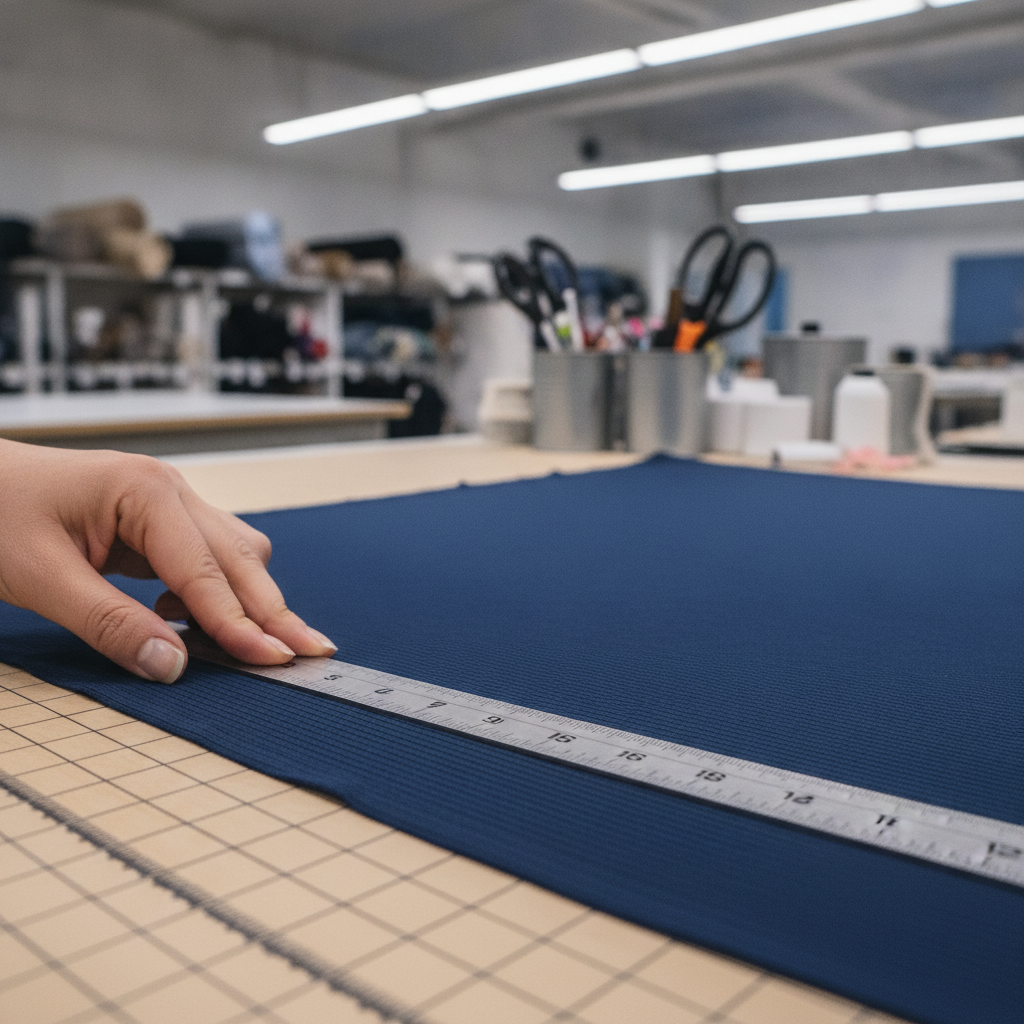
The Ultimate Guide to Fabric Recovery: Blocking, Stretch, and Rebound Testing in the United Kingdom
Understanding the resilience of your materials is fundamental to creating high-quality, long-lasting products. For anyone in the textile industry, from designers to manufacturers, mastering the principles of fabric recovery: blocking, stretch, and rebound is not just a technical skill—it’s a hallmark of quality. In the competitive United Kingdom market, where consumers demand durability and a perfect fit, knowing how a fabric behaves after being stretched or shaped is paramount. This comprehensive guide will walk you through the science, the methods, and the practical applications of testing fabric recovery, ensuring your garments and accessories maintain their form and function wear after wear.
Table of Contents
- 1. Understanding the Core Concepts: What is Fabric Recovery?
- 2. The Science of Stretch and Rebound: Key Influencing Factors
- 3. A Practical Guide to Testing Fabric Stretch and Recovery
- 4. Mastering the Art of Blocking for Optimal Fabric Recovery
- 5. Interpreting Your Results: What Do the Numbers Mean?
- 6. Fabric Recovery Standards and Regulations in the United Kingdom
- 7. Frequently Asked Questions
Understanding the Core Concepts: What is Fabric Recovery?
At its core, fabric recovery—also known as elastic recovery or dimensional stability—is a textile’s ability to return to its original size and shape after being stretched or deformed. It’s the ‘snap back’ quality that prevents a t-shirt collar from becoming a wide, wavy mess or leggings from bagging at the knees after just a few hours of wear. This property is not just about aesthetics; it’s a critical indicator of a garment’s quality, durability, and long-term fit.
It’s essential to distinguish between stretch and recovery. Stretch refers to how much a fabric can extend when a force is applied. Recovery is what happens after that force is removed. A fabric can have high stretch but poor recovery, meaning it extends easily but doesn’t return to its original form. This is a common flaw in low-quality materials. Conversely, a fabric with excellent recovery will bounce back almost perfectly, preserving the intended silhouette of the garment.
The importance of this property cannot be overstated. For consumers, it means clothes that fit well and look new for longer. For designers and manufacturers, understanding a fabric’s recovery potential is crucial for selecting the right material for a specific application. A fabric destined for activewear requires near-perfect recovery, while a loose-fitting linen shirt has different performance expectations.
Knit vs. Woven: A Structural Divide
The inherent structure of a fabric plays a massive role in its recovery properties. Knitted fabrics, created by interlocking loops of yarn, have natural mechanical stretch built into their structure. Think of the flexibility of a jersey t-shirt. Woven fabrics, made by interlacing two sets of yarns at right angles, are typically more stable and have less inherent stretch unless they incorporate elastomeric fibres.
- Knitted Fabrics: Their looped structure allows them to extend easily. Their recovery depends heavily on the fibre type and the tightness of the knit. A tight interlock knit will recover better than a loose single jersey.
- Woven Fabrics: These materials gain their stretch and recovery properties primarily from the fibres used. For instance, incorporating even a small percentage (2-5%) of elastane (like Lycra or Spandex) can transform a rigid woven denim into comfortable stretch jeans with excellent recovery.
Understanding this fundamental difference is the first step in predicting and testing how a fabric will perform in a finished product. It dictates not only the feel and fit but also the care and handling required to maintain its shape, a process where techniques like blocking become indispensable.
The Science of Stretch and Rebound: Key Influencing Factors
The performance of a fabric is not magic; it’s a result of materials science. Several interconnected factors determine a fabric’s ability to stretch and rebound effectively. A deep understanding of these elements allows for better material sourcing, design, and ultimately, a superior final product. Let’s break down the key components that govern fabric recovery: blocking, stretch, and overall performance.
Fibre Composition: The Building Blocks of Performance
The type of fibre used is the single most important factor. Fibres can be broadly categorized by their inherent elasticity.
- Elastomeric Fibres: This category is the champion of recovery. Spandex, known by brand names like Lycra and elastane, is a synthetic polymer renowned for its exceptional elasticity. It can be stretched to over 500% of its length without breaking and will return to its original size. Even small percentages blended with other fibres dramatically improve recovery.
- Natural Fibres with Good Recovery: Wool is the standout among natural fibres. The natural crimp in wool fibres acts like a tiny spring, giving it excellent resilience and recovery from stretching. This is why wool suits resist wrinkling and knitwear holds its shape.
- Natural Fibres with Poor Recovery: Cotton and linen have very low elasticity. When stretched, the fibres slide past each other and do not readily return to their original position, leading to bagging and wrinkling. This is why 100% cotton jeans often feel loose after a day’s wear.
- Synthetic Fibres: Polyester and nylon generally have better recovery than cotton but are not as elastic as elastane. Their properties can be manipulated during manufacturing (e.g., through texturizing) to enhance stretch and recovery.
Yarn Construction: The Twist and Ply
How fibres are spun into yarn also has a significant impact. A yarn with a higher twist will generally have better recovery. The twisting process packs the fibres together more tightly, creating a more compact and springy structure that is more resistant to permanent deformation. Similarly, plied yarns (where two or more single yarns are twisted together) are stronger and more stable than single yarns, which contributes to better shape retention in the final fabric.
Fabric Structure: The Weave and Knit
As mentioned earlier, the way yarns are assembled into fabric is critical. For knits, a tighter, more complex structure like an interlock or a rib knit will have better recovery than a simple, loose single jersey. The density of the knit (measured in stitches per inch) is also a factor; a denser knit means more yarn is packed into the same area, leading to greater stability. For wovens, the weave pattern matters. A plain weave is very stable, while a twill weave (like in denim) allows for slightly more give. The inclusion of elastomeric yarns is the primary way to impart significant recovery into woven fabrics.
Finishing Treatments: The Final Touch
After a fabric is woven or knitted, it undergoes various finishing processes that can enhance its performance. Heat setting is a crucial process for synthetic fabrics and blends. It uses controlled temperature to lock the fibres and fabric structure into a stable state, significantly improving dimensional stability and recovery. Chemical finishes can also be applied to improve wrinkle resistance and recovery, particularly for natural fibres like cotton. For those of us in the industry, understanding a fabric’s finish is just as important as knowing its composition. At Maz Accessories, we believe that a deep knowledge of materials is key to quality, a principle you can learn more about on our about us page.
| Fibre Type | Inherent Elasticity | Typical Recovery % | Common Uses |
|---|---|---|---|
| Elastane (Spandex/Lycra) | Excellent | 98-99% | Activewear, swimwear, stretch denim |
| Wool | Good | 90-95% | Knitwear, suiting, outerwear |
| Polyester | Moderate | 85-95% | Sportswear, general apparel |
| Cotton | Poor | 70-75% | T-shirts, casual wear, denim |
| Linen | Very Poor | 60-65% | Summer apparel, tablecloths |
A Practical Guide to Testing Fabric Stretch and Recovery
While industrial labs use sophisticated machinery, the fundamental principles of testing fabric recovery can be replicated with simple tools. This allows small businesses, designers, and even meticulous home sewists across the United Kingdom to assess material quality accurately. Whether you’re following a standardized method or a DIY approach, consistency is the key to reliable results.
Standardised Testing Methods
In a professional setting, tests are conducted under controlled conditions following established standards to ensure results are repeatable and comparable across different labs and manufacturers. The most common standards include:
- ASTM D2594: The Standard Test Method for Stretch Properties of Knitted Fabrics Having Low Power. This is a widely used standard in the US and internationally.
- BS EN 14704-1: A European and British standard for determining the elasticity of fabrics.
These tests typically involve clamping a fabric sample of a specific size into a machine, stretching it to a predetermined percentage of its length for a set amount of time, and then measuring its length after a recovery period. While access to this equipment is limited, understanding the process helps inform a reliable DIY method.
The DIY Method for Accurate At-Home Testing
You can achieve surprisingly accurate results with a ruler, a marker, some weights, and a flat surface. Follow these steps carefully for the best outcome.
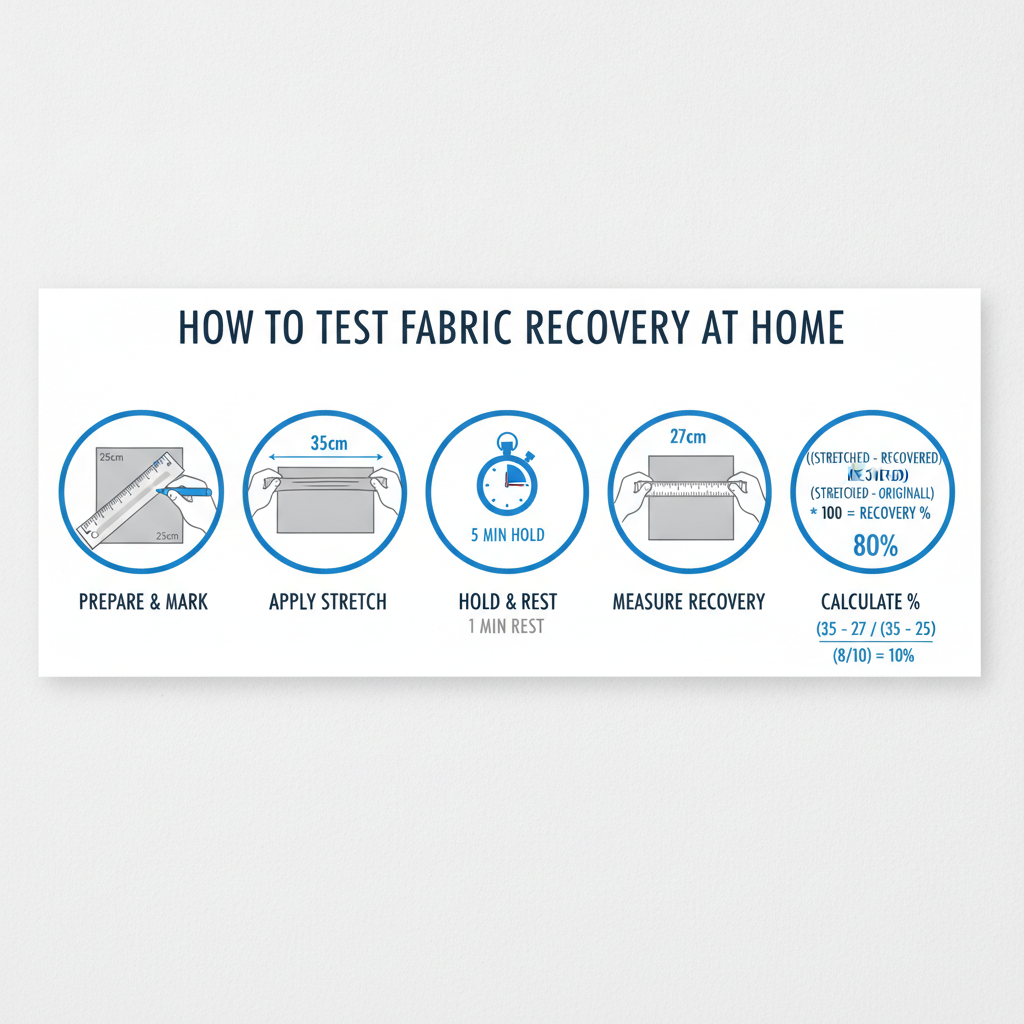
- Prepare Your Fabric Sample: Cut a sample of fabric, ideally at least 50cm long and 10cm wide. It’s crucial to test both the lengthwise (warp/wale) and crosswise (weft/course) directions, as stretch and recovery can differ significantly. Let the fabric rest flat for at least 24 hours in the environment where you’ll be testing to allow it to acclimate.
- Mark and Measure: Lay the sample flat without any tension. Using a fabric marker and a ruler, draw two marks exactly 25cm apart in the centre of the sample. This is your Original Length (L1).
- Apply Controlled Stretch: Secure one end of the fabric. Attach a clamp and a consistent weight to the other end to apply a controlled stretch. Alternatively, you can manually stretch the fabric to a specific length (e.g., 30cm) and hold it in place with pins on a corkboard. The goal is to apply a consistent force or extension. Let’s say you stretch it to 35cm. This is your Stretched Length (L2).
- Hold the Stretch: Keep the fabric in its stretched state for a consistent period. For industry standards, this can be hours, but for a practical DIY test, holding it for 5-10 minutes is a good starting point.
- Release and Rest: Unclamp or unpin the fabric and lay it flat on a surface without any tension. Allow it to rest and recover. The timing here is critical for accurate measurement.
- Measure for Immediate Recovery: After exactly one minute of rest, measure the distance between your two marks. This is your Immediate Recovered Length (L3).
- Measure for Delayed Recovery: For a more complete picture, allow the fabric to rest for a longer period, such as one hour or even 24 hours, and measure again. This shows how much temporary deformation, or ‘growth’, the fabric experiences.
- Calculate Recovery Percentage: Now it’s time for some simple maths. The formula for calculating recovery is:
Recovery % = ((L2 – L3) / (L2 – L1)) * 100
Using our example: L1=25cm, L2=35cm, and let’s say L3 (after 1 min) is 25.5cm.
Recovery % = ((35 – 25.5) / (35 – 25)) * 100 = (9.5 / 10) * 100 = 95%.
Mastering the Art of Blocking for Optimal Fabric Recovery
Testing tells you about a fabric’s potential, but proper handling and finishing techniques like blocking can help you realize that potential. Blocking is a process used primarily for knitted and crocheted items, but its principles apply to shaping many textiles. It involves getting the fabric wet, shaping it to the desired dimensions, and letting it dry. This process coaxes the fibres into their new configuration, evens out stitches, and dramatically improves the final appearance and dimensional stability.
Why Blocking is Crucial, Especially for Natural Fibres
While a fabric with high elastane content will snap back on its own, natural fibres like wool, alpaca, and even cotton benefit immensely from blocking. When these fibres get wet, their internal structures relax. By shaping the item while it’s wet and allowing it to dry in that shape, you are essentially ‘setting’ the fibres. This process:
- Corrects Dimensions: It allows you to shape a garment to precise measurements.
- Evens Out Texture: It helps distribute the yarn evenly, making knitted stitches look more uniform.
- Enhances Drape: A well-blocked garment will hang and move more beautifully.
- ‘Teaches’ Fabric Memory: It sets the final shape, improving the item’s ability to return to that shape after being worn and washed. This is a key aspect of maximizing fabric recovery.
Types of Blocking Techniques
The method you choose depends on the fibre content of your fabric. Always test on a swatch first!
- Wet Blocking: This is the most intensive method, ideal for sturdy natural fibres like non-superwash wool.
- Submerge the item in lukewarm water with a gentle wool wash for about 20-30 minutes.
- Gently lift the item out, supporting its weight so it doesn’t stretch.
- Carefully squeeze out excess water (never wring or twist!). You can roll it in a towel and press to remove more moisture.
- Lay the damp item on a flat, rust-proof surface like blocking mats or a clean towel.
- Gently shape it to your desired dimensions, using rust-proof T-pins to secure the edges if necessary.
- Allow it to air dry completely, which can take 24-48 hours.
- Spray Blocking: A gentler option suitable for more delicate fibres like silk or cashmere, or for items that just need a light refresh. Pin the dry item to your blocking surface, shaping it as you go. Then, use a spray bottle to mist it with water until it’s evenly damp, but not saturated. Let it air dry.
- Steam Blocking: This is the go-to method for synthetic fibres like acrylic, which can be damaged by prolonged soaking or high heat. Pin the item to shape on a heat-safe surface. Using a steam iron or a garment steamer, hold the steamer several inches above the fabric and apply steam evenly across the surface. Never let the hot iron touch the fabric directly, as it can melt the fibres. The steam will relax the fibres enough for them to be set in their new shape as they cool and dry.
Mastering these blocking techniques is a vital skill for anyone working with textiles in the UK, ensuring that every finished piece looks its absolute best and performs as expected.
Interpreting Your Results: What Do the Numbers Mean?
You’ve meticulously tested your fabric and have a recovery percentage. What now? This number is a powerful piece of data that can guide your design and production decisions. Understanding how to interpret it is key to avoiding common garment failures like sagging, bagging, and a loss of shape.
Defining “Good” vs. “Poor” Fabric Recovery
While there’s no single universal standard, we can establish some general benchmarks based on the intended end-use of the fabric. These percentages represent the fabric’s ability to return to its original dimension after being stretched.
- Excellent Recovery (95-99%): This is the gold standard for performance-critical garments. Fabrics in this range will maintain a close, supportive fit without bagging. This is essential for activewear, swimwear, compression garments, and high-quality stretch denim.
- Good Recovery (90-94%): This range is suitable for a wide variety of apparel, including high-quality t-shirts, knit dresses, and comfortable trousers. It offers a great balance of comfort, stretch, and shape retention for everyday wear.
- Moderate Recovery (85-89%): Fabrics in this category will show some minor ‘growth’ or bagging after extended wear, particularly at stress points like knees and elbows. This might be acceptable for more relaxed-fit garments but is not ideal for close-fitting styles.
- Poor Recovery (<85%): These fabrics will likely stretch out and lose their shape quickly. This is typical of 100% cotton or linen fabrics without any elastomeric content. While this characteristic can be desirable for certain aesthetics (e.g., a drapey, lived-in look), it’s generally considered a quality issue for most apparel.
Implications for Garment Design and Use
Your recovery percentage directly informs how you should use a fabric. A low recovery percentage isn’t necessarily a ‘bad’ fabric, but it’s the wrong fabric for a pair of leggings. Here’s how to apply your findings:
| Garment Type | Ideal Recovery % | Reasoning |
|---|---|---|
| Leggings / Activewear | 95%+ | Needs to withstand constant movement and return to shape perfectly to provide support and prevent bagging. |
| Fitted Knit Dress | 92%+ | Requires good shape retention to avoid sagging in the seat or losing its silhouette throughout the day. |
| T-Shirt / Polo Shirt | 90%+ | Good recovery prevents the collar and hem from stretching out and maintains a clean look. |
| Stretch Denim Jeans | 93%+ | Crucial for preventing the dreaded ‘baggy knee’ syndrome and maintaining a consistent fit between washes. |
| Relaxed Fit Linen Trousers | <80% | In this case, low recovery is part of the aesthetic. The fabric is expected to wrinkle and grow for a casual, lived-in feel. |
By matching the fabric’s performance to the garment’s purpose, you ensure customer satisfaction and build a reputation for quality. This level of material intelligence is what separates exceptional brands from the rest. For any questions on material sourcing, feel free to contact our experts at Maz Accessories.
Fabric Recovery Standards and Regulations in the United Kingdom
In the professional sphere, adherence to standards is not just about quality control; it’s also about meeting regulatory requirements and consumer expectations. For businesses operating in the United Kingdom, understanding the landscape of textile testing and consumer law is vital for maintaining a reputable and legally compliant operation.
The British Standards Institution (BSI) is the UK’s national standards body, which develops and publishes standards for a vast range of products and services, including textiles. Many of the relevant standards are harmonized with European (EN) and International (ISO) standards, ensuring that products can be traded and compared across borders. For fabric recovery, standards like the aforementioned BS EN 14704 series are the benchmark for formal laboratory testing.
Industry Bodies and Consumer Law
Beyond the specific testing standards, industry bodies play a crucial role in promoting quality. The UK Fashion & Textile Association (UKFT) is the largest network for fashion and textile companies in the UK, providing support and championing the industry’s interests. They advocate for best practices in manufacturing, sourcing, and quality control.
From a legal perspective, the most important piece of legislation for UK consumers is the Consumer Rights Act 2015. This act stipulates that goods must be of ‘satisfactory quality’, ‘fit for purpose’, and ‘as described’. A garment that stretches out of shape after one wash could be deemed not of satisfactory quality. For example, if a pair of leggings bags at the knees so severely that they no longer fit properly, a consumer would have a strong case for a refund or replacement under this act. You can find more details on the official UK government website. Therefore, robust testing of fabric recovery is not just good practice—it’s a crucial part of a business’s due diligence to ensure its products are legally fit for sale in the UK market.
Key Takeaways
- Recovery is Not Stretch: Fabric recovery is a material’s ability to return to its original shape after being stretched. High stretch does not guarantee good recovery.
- Fibre is Key: Elastane (Lycra/Spandex) provides the best recovery. Wool is the best among natural fibres, while cotton and linen have poor recovery.
- Test Consistently: Whether using a DIY or lab method, consistency in sample size, stretch force, and time is crucial for comparable results.
- Blocking Maximizes Potential: For natural fibres, blocking is an essential finishing step to set the shape and improve the fabric’s memory and recovery.
- Match Performance to Purpose: Use your test results to choose the right fabric for the right garment. A recovery rate of over 95% is ideal for activewear, while lower rates may be acceptable for relaxed fits.
- UK Standards Matter: Adhering to quality standards and understanding the Consumer Rights Act 2015 is essential for any textile business operating in the United Kingdom.
Frequently Asked Questions
What’s the difference between fabric stretch and fabric recovery?
Fabric stretch refers to how much a fabric can elongate when a force is applied. It’s the ‘give’ in the material. Fabric recovery, on the other hand, is the fabric’s ability to ‘snap back’ to its original dimensions after that stretching force is removed. A fabric can have great stretch but poor recovery, meaning it will easily get stretched out of shape.
Can you improve the recovery of a fabric after it’s been made into a garment?
To some extent, yes. For natural fibres like wool, re-blocking the garment (wetting, shaping, and drying) can help reset the fibres and restore its shape. For cotton items, washing and drying (especially with heat, if the fabric allows) can cause the fibres to shrink back, temporarily improving recovery. However, you cannot fundamentally change the inherent properties of the fibres. A fabric with poor recovery will always be prone to bagging.
Why does my t-shirt collar get stretched out and wavy?
This common issue, often called ‘bacon neck’, is a classic example of poor fabric recovery. The rib-knit fabric used for collars is designed to be stretchy, but if it’s made from low-quality cotton without any elastane, it lacks the ability to recover after being stretched over your head repeatedly. The fibres get permanently displaced, leading to that wavy, stretched-out look.
Is 100% cotton good for fabric recovery?
No, 100% cotton generally has poor fabric recovery. Cotton fibres have low elasticity, so once they are stretched, they tend to stay in that elongated state. This is why 100% cotton jeans or t-shirts often feel loose and baggy after a few hours of wear. To improve this, cotton is frequently blended with a small percentage of elastane (usually 2-5%) to create stretch cotton, which offers significantly better recovery.
How do I test fabric recovery without special equipment?
You can perform a simple, effective test with a ruler and a marker. Cut a fabric swatch, mark a 25cm length on it, and stretch it to a longer, fixed length (e.g., 35cm) for 5 minutes. Release the tension, let it rest for one minute, and then re-measure the distance between the marks. A smaller final measurement indicates better recovery. Calculating the recovery percentage using the formula in this article will give you a quantifiable result for comparison.
Conclusion: The Foundation of Quality
A deep understanding and rigorous testing of fabric recovery: blocking, stretch, and rebound properties are not mere technicalities; they are the very foundation upon which quality garments and accessories are built. From the initial fibre choice to the final blocking process, every step influences how a product will perform and endure over time. By arming yourself with this knowledge, you can make more informed sourcing decisions, design better products, and provide your customers with the lasting quality they expect and deserve in the discerning United Kingdom market.
Ready to build your next collection with materials you can trust? Explore the world of premium materials and expert craftsmanship on the Maz Accessories homepage and see how our commitment to quality can elevate your brand.
